Most of the calls I get during tax season aren't really about taxes.
They're about feelings.
Someone got a number they weren't expecting. Now they're frustrated. Now they want someone to make that frustration go away. They want to feel like they're not being taken advantage of. They want to feel like they're doing everything they can.
That's the problem.
Feelings are not a strategy. And when you make tax decisions based on how you feel, you almost always end up worse.
The Cycle
Here's what most business owners actually do with their taxes.
January through October: ignore them. You've got a business to run. Taxes are a next-week problem. November and December hit, and someone mentions you should "buy something before year end." Maybe you do. Maybe you don't. You're not really sure because you don't know your numbers. March rolls around and your accountant asks for documents. You scramble. You hand over a box of stuff. Then April comes and there's a number.
And it stings.
That stinging feeling is where the real problem starts. Because what comes next is reactive. Emotional. And expensive.
We call it rage planning. You're not building a strategy. You're trying to soothe a wound. And the decisions you make from that place almost never hold up.
The Extension Myth
Here's one I hear constantly this time of year.
"I'm just going to file an extension. That gives me more time to figure things out."
I understand the instinct. More time sounds good. More time feels like more options.
But here's what an extension actually is: more time to file your return. That's it.
If you owe taxes for last year, that money is due April 15. An extension gives you until October to file the paperwork. It does not move the payment deadline. It does not create new opportunities to lower your bill.
This is one of the most common and costly misunderstandings I see. Business owners assume they have more runway than they do. They wait. They don't pay estimated taxes. Then they file in October and owe not just the original amount, but penalties and interest on top.
The extension didn't save them anything. It cost them.
Is This You?
You know you probably need better tax planning. Maybe you've heard the conversation about bookkeeping, about clean data, about getting ahead of it.
But when it comes down to it, you want help with taxes. Not bookkeeping.
Bookkeeping feels like administrative work. Tax planning feels like strategy. You want the strategy without the foundation.
I get it. It's human. We all want the result without the process.
But this is like wanting a diagnosis without the bloodwork. The doctor might be brilliant. If he doesn't have your numbers, he's guessing. That's what happens when a CPA tries to do tax planning without current books. They're working in the dark.
And you're paying for it.
What a Goal Actually Does
Here's the shift I want you to make.
Stop asking: "How do I pay less in taxes?"
Start asking: "What is my actual financial goal, and what does the tax picture need to look like to get there?"
That sounds small. It isn't.
I talked to someone recently who was frustrated about their finances. When I suggested they sit down and build a budget, they said something that has stayed with me: "I don't even want to do a budget because I don't want to know what we're spending."
That's the same instinct driving rage planning. Avoidance feels safer than reality. The problem is, avoiding the truth doesn't change the numbers. It just delays the reckoning.
I wrote about this in our budgeting piece, and I'll say it again here: a budget is like a mirror. It doesn't lie. When you put your finances on paper on purpose and compare them to your actual results, the picture gets clear fast. You see what's working. You see what isn't. You can't manage what you don't measure.
The same principle applies to tax planning. When you have a real goal, the strategy becomes math. Not emotion. Not Googling at midnight. Not asking your buddy what his CPA told him.
You want to fund your retirement aggressively this year? Here's the number. Here's the structure. Here's what you need to earn and what you need to contribute. Done.
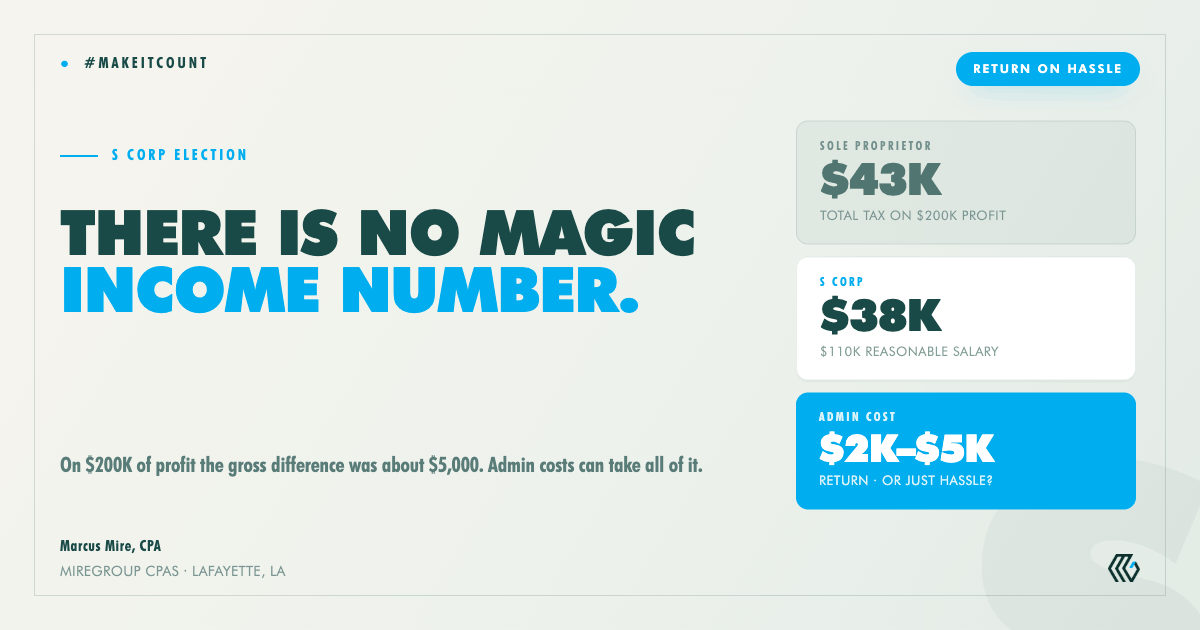
You want to take distributions out of your S-Corp efficiently? Here's your salary range, here's your QBI calculation, here's the tax exposure. Done.
The beauty of working from a goal is that the answers become black and white. Either the math works or it doesn't. Either you qualify or you don't. Either it makes economic sense or it doesn't.
You might not like the answer. But at least you know what you're dealing with. You're not reacting. You're deciding.
That's the difference between a business owner who saves $35,000 and one who spends $80,000 on a truck and calls it a win.
What Calm Looks Like
Picture this.
It's March. Your books are current. You have a budget in place that you've been comparing to your actuals every month. You know your income. You know your estimated liability. You've already had the strategic conversations with your CPA because the data was ready in January.
No panic. No scramble. No Google searches at midnight wondering if you should put something on your credit card before the 15th.
You know the number. You know the plan. You made your moves when they could actually make a difference.
That's not luck. That's what happens when the mirror isn't covered up. When you've built the foundation first and you're operating from clarity instead of fear.
Not exciting. Not a hack. Not a loophole.
Just clarity.
And clarity is worth more than any single strategy I could hand you.
Want to build that foundation? Start with the budget. We put together a full breakdown of how to do it in Xero or QuickBooks at mire.group/blog/why-your-business-needs-a-budget. Then come talk to us about what the tax picture should look like on top of it.
The foundation matters. The goal matters. The data matters. Get those three right and the emotion takes care of itself.


 Mire Group Marketing: Aug 6, 2026, 11:21:10 AM