As we head into tax season, I’m thinking of a few client experiences from last year.
One client: We saved them roughly $35,000. Another: about $40,000.
What did we do? Some exotic strategy? A fleet of write-offs? A scheme from a 90-second Instagram video?
No. We had access to their bookkeeping. In fact, for both clients, we do their books.
That's it.
Good, accurate, timely financial data. That's what made $75,000 in real savings possible. Not a hack. Not a loophole. The foundation.
Now here's why I'm telling you this: because most business owners approach tax season the exact opposite way. They start with the strategy and skip the foundation.
And it almost always costs them.
Let me explain.
The Emotional Trap
Every year around this time, I watch business owners do the same thing. They get a tax bill that stings. Fresh wound. And instead of stepping back and building a plan, they react.
We call it rage planning.
Here's what it looks like:
Business owner gets a big tax bill. Fresh wound. They're frustrated. Maybe envious of someone who "pays nothing in taxes." They start Googling. They find a strategy that sounds too good to be true. They call their CPA and say "let's do this."
The decision has already been made. They're not curious. They're not asking questions. They're reacting.
I always tell people: approach your finances out of a mind that's curious, not out of a mind that's already made the decision.
Because when you plan from a place of frustration, you end up in one of two places:
- You spend money you didn't need to spend. "My CPA said I need to buy something before year end." Sound familiar? If you spend $80,000 on a truck to "save" $28,000 in taxes, you're still out $52,000. That's not a strategy. That's just spending money.
- You chase complexity that creates more problems than it solves. Sham companies. Manufactured losses. Structures that only exist on paper. The IRS has a name for this: step transaction doctrine, and they're very good at spotting it. Now you're not just paying taxes. You're paying penalties.
A good decision should make economic sense first. The tax benefit is just a bonus. If the only reason you're doing something is to reduce your tax bill, that's a red flag.
Is This You?
Let me paint the picture.
You run a good business. You're profitable. But tax time always feels like a surprise.
Your books are a few months behind, maybe more. You're not really sure what you've made this year. You couldn't tell me your profit margin if I asked right now.
You might have an accountant, but the relationship is basically: you hand them a box of stuff in March, they hand you back a number in April, and you write a check.
That's not tax planning. That's tax reacting.
And look, I get it. You're running a business. You've got clients, employees, payroll, operations. The books are the thing that always gets pushed to next week. But here's the cost of that:
You can't make strategic moves if you don't know where you stand.
You can't optimize your salary for QBI savings if you don't know your income. You can't time retirement contributions if you don't know your profit. You can't plan anything if the data doesn't exist yet.
You're flying blind. And flying blind in tax season means you're making emotional decisions instead of strategic ones.
What Actually Saves Money
So if rage planning doesn't work, what does?
Go back to those two clients. The $35,000 and the $40,000. The reason we could help them wasn't because we knew some secret the IRS doesn't want you to know.
It's because we had clean data to work with, and we had it with enough time to act.
When your financial data is organized, accurate, and timely, the strategies practically reveal themselves:
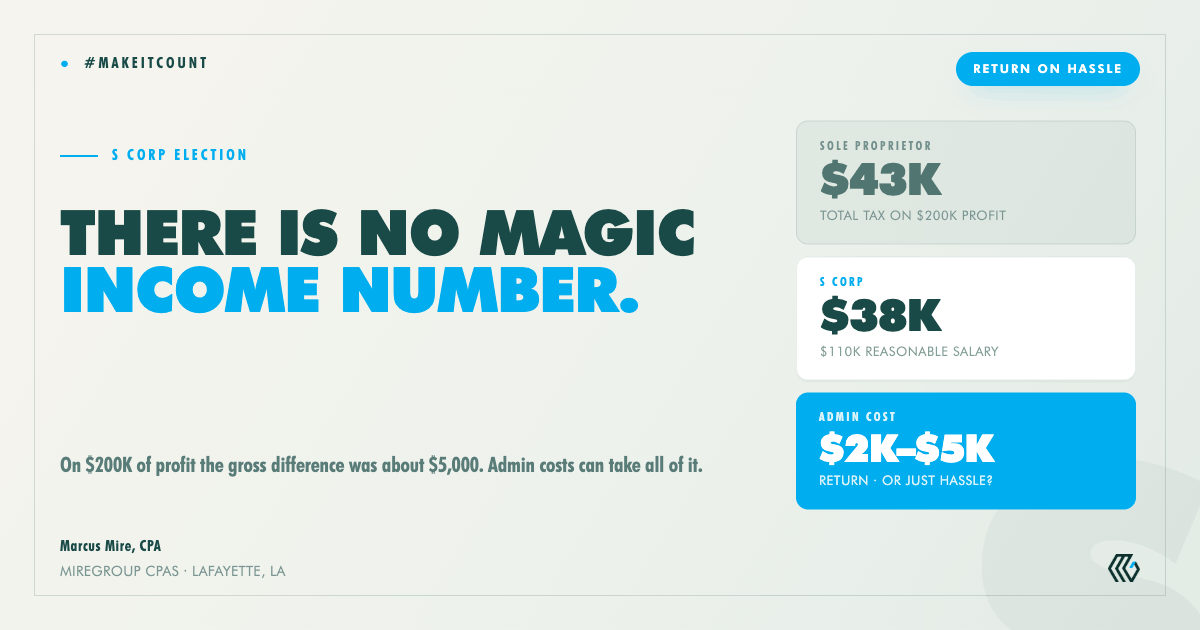
Salary optimization for QBI. If you're an S-Corp owner above certain income thresholds, the Qualified Business Income deduction gets limited based on W-2 wages. Getting your salary in the right range can mean thousands in additional deductions. But you can't calculate this if you don't know what you've made.
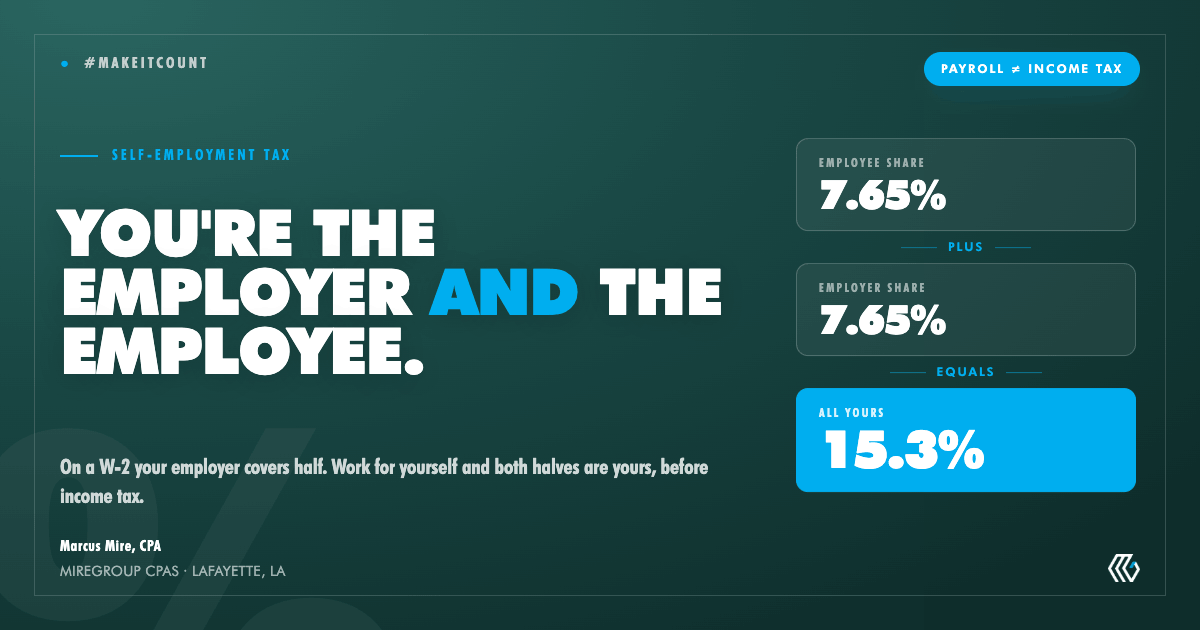
Strategic retirement contributions. Employer profit-sharing contributions avoid the 15.3% payroll tax hit that salary increases carry. But the math only works if you know your numbers with enough time to act.
Year-round positioning instead of December scrambling. When we're doing someone's books monthly, we're not waiting until December to have the tax conversation. We see it coming in July. In September. We have time to make moves that actually work.
None of this is complicated. But all of it requires one thing: clean, current financial data.
The Foundation First Approach
I know this isn't the sexy answer. You want the hack. The loophole. The one move that saves you $50,000.
But here's what twenty years of doing this has taught me: the businesses that save the most on taxes aren't the ones with the fanciest strategies. They're the ones with the cleanest books.
It's the same principle I talk about with the bookkeeper vs. controller distinction. A lot of business owners think they have strategic financial help. What they actually have is someone paying bills and running payroll. That's transactional work. Important, but it's rear-view mirror stuff: it tells you where you've been.
Tax planning is windshield work. It's forward-looking. And you can't look forward if the dashboard is broken.
So if you're reading this thinking "I know I could save more on taxes," and I hear this all the time, here's my honest advice:
Don't start with strategies. Start with your books.
Get them right. Get them current. Get them accurate. Work with someone who can give you timely data that you can actually rely on for decisions.
Then the tax planning conversations become simple. Because you're not guessing. You're not reacting. You're making calm, strategic decisions based on real numbers.
That's not exciting. But it works. Every single time.
What a Calmer Tax Season Looks Like
Imagine this instead:
It's January. You already know your income for last year because your books closed on time. You know your estimated tax liability. You've already had a conversation with your CPA about what moves to make, not because you're scrambling, but because the data was ready.
You're not angry. You're not Googling loopholes at midnight. You're not calling your accountant in a panic asking if you should buy a truck.
You're calm. You're informed. And you're making decisions from a place of clarity, not frustration.
That's what this looks like when you do it right.
The foundation matters. The data matters. The approach matters. And your mindset matters more than any single strategy ever will.


 Mire Group Marketing: Aug 6, 2026, 11:21:10 AM